_edited.png)
How to Market Your Small Business in 2026: A Practical Guide to Getting Found, Chosen, and Remembered
Marketing a small business in 2026 is not about doing everything. It is about becoming easier to find, easier to trust, and easier to choose.
The best way to market a small business today is to build visibility across the places people already search: Google, social media, directories, maps, reviews, email, and AI-powered search results. A strong marketing strategy helps customers understand who you are, what you offer, where you serve, and why they should choose you.
For women-owned businesses, this visibility matters even more. Many incredible women-led brands are already doing great work, but they are still hard to find when customers search online. The Future is Females exists to help close that visibility gap by making women-owned businesses easier to discover, support, and celebrate.
What Is Small Business Marketing?
Small business marketing is the process of promoting your business so the right people can find you, trust you, and buy from you.
It includes:
Your website
Google Business Profile
Local SEO
Online reviews
Social media
Email marketing
Business directories
Community visibility
Paid ads
Word-of-mouth referrals
The goal is not just to “post more.” The goal is to create a clear online presence that answers customer questions and moves them toward action.
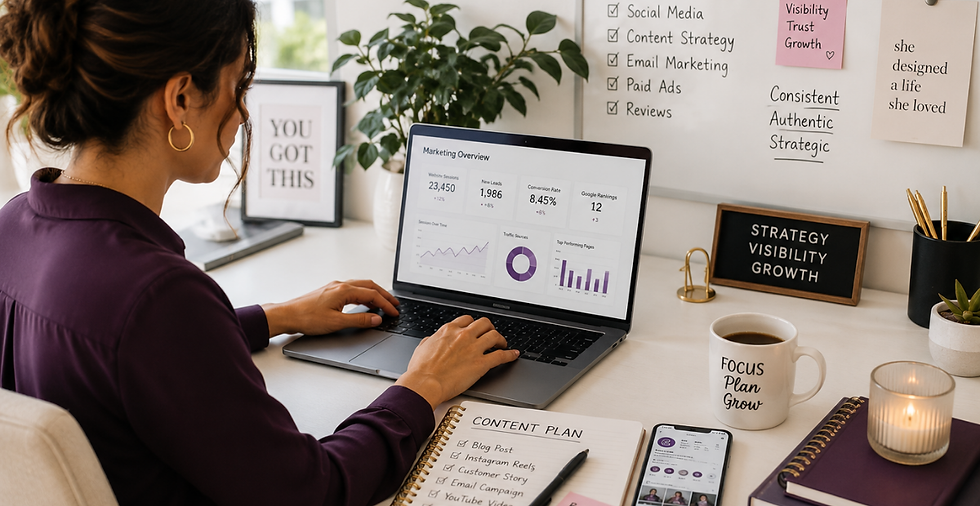
Why Small Business Marketing Has Changed
Customers no longer follow one straight path before buying. They may find you through a Google search, check your reviews, look at your Instagram, ask AI for recommendations, search a business directory, and then visit your website before calling.
According to LocaliQ’s 2026 small business marketing trends report, unpaid social media, social media ads, SEO, and email marketing are among the most-used marketing channels for small businesses. HubSpot also reports that email, paid social, and content marketing remain strong ROI channels for brands.
1. Start With a Clear Website
Your website is your digital home base. Even if most people first find you on social media or Google, they often visit your website before making a decision.
Your website should clearly answer:
What do you offer?
Who do you help?
Where are you located or available?
How can someone book, buy, call, or inquire?
Why should someone trust you?
For AI search and SEO, clarity matters. Google’s AI search guidance says traditional SEO fundamentals still apply to generative search experiences because AI features pull from Google’s search index and ranking systems.
2. Optimize for Local Search
If you serve a specific city, region, or service area, local SEO is one of the most important parts of your marketing strategy.
Local SEO helps your business appear for searches like:
“best bakery near me”
“wedding planner in Atlanta”
“interior designer near me”
“women-owned business in Austin”
“local accountant for small business”
To improve local visibility, make sure your business name, address, phone number, website, hours, services, and categories are consistent everywhere online.
3. Build a Strong Google Business Profile
Your Google Business Profile can influence how customers find and evaluate your business.
Keep it updated with:
Accurate contact information
Business hours
Services or products
Photos
Posts and updates
FAQs
Review responses
A complete profile helps customers make faster decisions and supports visibility in map-based searches.
4. Get Listed in Relevant Business Directories
Business directories help customers discover businesses by category, location, service, or identity.
A directory listing can support visibility by giving search engines and customers more structured information about your business. For women-led brands, a profile on The Future is Females helps your business become easier to discover by people who intentionally want to shop, hire, and support women-owned businesses.
A good directory listing should include:
Business name
Category
Location or service area
Website
Contact information
Short business description
Photos
Social media links
Keywords customers actually search
5. Use Content to Answer Customer Questions
Helpful content is one of the best ways to attract people before they are ready to buy.
Think about the questions customers ask before hiring or purchasing:
How much does this cost?
What should I look for?
How do I compare providers?
What mistakes should I avoid?
When should I hire someone?
What makes a business trustworthy?
For example:
A wedding planner can write “How to Choose a Wedding Planner”
A financial advisor can write “What to Ask Before Hiring a Financial Advisor”
A home service business can write “How to Know When You Need Professional Help”
A boutique can write “How to Build a Capsule Wardrobe”
This type of content helps your business show up for searchers who need education before they are ready to buy.
6. Collect and Respond to Reviews
Reviews are one of the strongest forms of trust.
Ask happy customers to leave reviews on Google, Facebook, Yelp, industry sites, and directory profiles. Then respond to reviews professionally and consistently.
Strong review responses can help show:
You are active
You care about customer experience
You are trustworthy
You value feedback
For women-owned businesses, reviews also help build credibility in competitive markets where customers may not yet know your brand.
7. Show Up Consistently on Social Media
Social media is not just about going viral. For small businesses, it is about staying visible, building familiarity, and reminding people what you do.
Post content that shows:
Your products or services
Your process
Customer wins
Behind-the-scenes moments
Founder stories
FAQs
Local involvement
Promotions
Testimonials
For women-owned businesses, founder-led content can be especially powerful because people often connect with the person behind the brand.
8. Build an Email List
Social media visibility can change overnight. Your email list gives you a direct way to reach customers and supporters.
Use email to share:
New products
Helpful tips
Seasonal updates
Events
Promotions
Customer stories
Referral opportunities
Email does not need to be complicated. A simple monthly newsletter can keep your business top of mind.
9. Make Your Business Easy to Recommend
Word-of-mouth is still one of the most powerful marketing channels, but you need to make referrals easy.
Create clear links people can share:
Website
Directory profile
Google review link
Booking page
Contact page
Social profile
When someone says, “Do you know a good local business for this?” your brand should be easy to send.
10. Track What Is Working
You do not need a complicated dashboard to understand your marketing performance.
Start by tracking:
Website visits
Form submissions
Phone calls
Google Business Profile views
Review growth
Social engagement
Email clicks
Directory profile visits
Bookings or sales
The goal is to identify which activities are actually helping people discover and choose your business.
The Bottom Line
The best small business marketing strategy is simple, clear, and consistent.
You need a strong website, local SEO, reviews, content, social visibility, email follow-up, and directory listings that help customers find and trust you.
For women-owned businesses, visibility is not just a marketing issue. It is an opportunity issue. When more people can find women-led businesses, more dollars can flow into families, communities, and local economies.
The Future is Females helps make that possible by giving women-owned businesses a place to be discovered, supported, and shared.
FAQ
What is the best way to market a small business?
The best way to market a small business is to build a clear online presence through a website, Google Business Profile, local SEO, reviews, social media, email marketing, and relevant business directories.
How can I get more customers for my small business?
You can get more customers by improving your visibility where people already search, creating helpful content, collecting reviews, staying active online, and making it easy for people to contact or book with you.
Do small businesses need SEO?
Yes. SEO helps small businesses appear when people search for products, services, local providers, and answers online.
Why should women-owned businesses use directories?
Directories help women-owned businesses become easier to find by people who intentionally want to shop, hire, and support women-led brands.


Comments